

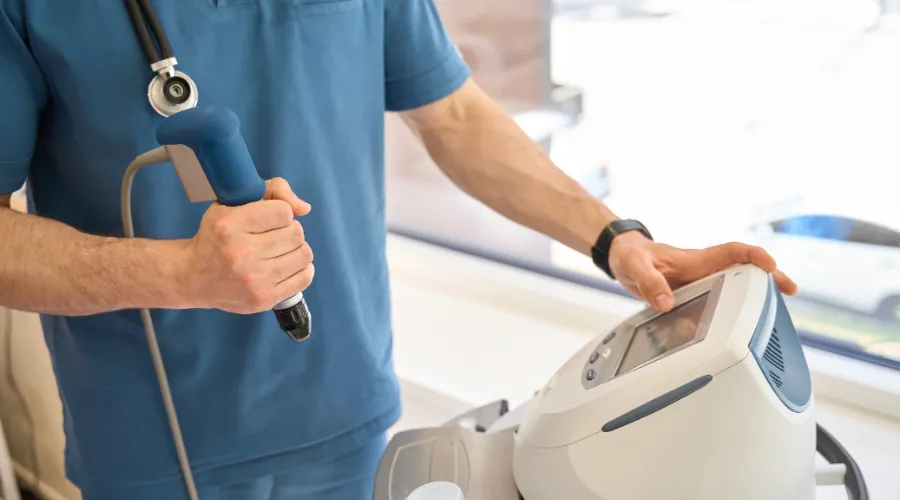
If you are considering shockwave therapy for chronic pain or an injury, one of the first questions you may ask is whether the treatment hurts. The honest answer is that shockwave therapy can cause some discomfort, but most patients tolerate it very well.
For many people, the treatment feels intense rather than truly painful. The sensation is often described as rapid tapping, pulsing, or pressure against the skin and underlying tissue. Areas that are already irritated or inflamed may feel more sensitive during treatment, especially at the beginning of a session.
At Satriano Physiotherapy, shockwave therapy is commonly used to help patients recover from chronic pain, tendon injuries, plantar fasciitis, muscle dysfunction, and other stubborn conditions that have not improved with rest alone.
What Does Shockwave Therapy Feel Like?
Shockwave therapy uses acoustic pressure waves that travel into the tissue to stimulate healing and increase circulation. Because the treatment targets injured or irritated tissue, patients often feel the sensation more strongly in painful areas.
Some patients describe the feeling as:
- Rapid pulses against the skin
- Deep pressure
- Mild snapping sensations
- Intense vibration
- Tenderness in tight or inflamed areas
The sensation can vary depending on the body part being treated and the severity of the condition. Areas with significant inflammation or chronic tightness may feel more sensitive during treatment.
Most sessions only last a few minutes per treatment area, which helps make the discomfort manageable for many patients.
Why Can Shockwave Therapy Feel Uncomfortable?
The discomfort associated with shockwave therapy is usually connected to the condition itself.
Healthy tissue often tolerates the pressure waves easily, while damaged or inflamed tissue may react more sensitively. Chronic tendon injuries, scar tissue, muscle adhesions, and tight fascia can all contribute to temporary discomfort during treatment.
The acoustic waves create controlled stimulation within the tissue to trigger the body’s healing response. This process helps increase blood flow, improve collagen production, and break down dysfunctional tissue patterns.
Although the treatment may feel intense at times, it is not designed to cause damage.
Does Everyone Experience Pain During Treatment?
No. Some patients feel only mild discomfort, while others experience more sensitivity depending on the injury and pain tolerance.
For example, someone receiving shockwave therapy for mild calf tightness may barely notice discomfort, while a patient with severe plantar fasciitis or chronic Achilles tendinopathy may feel a sharper sensation over irritated tissue.
Pain tolerance also plays a role. What feels intense to one patient may feel very manageable to another.
Most providers can adjust the intensity of treatment based on the patient’s comfort level and symptoms.
Is Shockwave Therapy More Painful Than Dry Needling?
Patients often compare shockwave therapy to other physiotherapy treatments like dry needling, deep tissue massage, or manual therapy.
Shockwave therapy is different because the sensation comes from rapid acoustic pulses instead of needles or sustained pressure. Some patients find it more tolerable than dry needling, while others feel the opposite.
One advantage of shockwave therapy is that the treatment is non-invasive. There are no injections, incisions, or surgical recovery periods involved.
Most patients are able to return to normal daily activities shortly after treatment.
Does the Pain Mean the Treatment Is Working?
Not necessarily. A common misconception is that shockwave therapy must be extremely painful to be effective.
While some discomfort is normal, excessively painful treatment is not always better. Effective therapy focuses on delivering the right level of stimulation without unnecessarily aggravating the tissue.
Experienced physiotherapists adjust treatment intensity based on the patient’s condition, pain tolerance, and response to therapy.
The goal is to stimulate healing while keeping treatment manageable and productive.
Is There Pain After Shockwave Therapy?
Some soreness after treatment is normal. Many patients experience mild tenderness, aching, or temporary sensitivity in the treated area for 24 to 48 hours afterward.
The sensation is often similar to post-workout soreness or mild bruising. This temporary irritation is part of the body’s healing response.
In many cases, patients notice improvement in pain and mobility after several sessions as the tissue begins adapting and healing.
Some conditions respond quickly, while chronic injuries may require multiple treatments over several weeks.
What Conditions Are Commonly Treated With Shockwave Therapy?
Shockwave therapy is frequently used for chronic musculoskeletal conditions that involve irritated tendons, fascia, or soft tissue.
Common conditions include:
- Plantar fasciitis
- Achilles tendinitis
- Tennis elbow
- Shoulder calcifications
- Hip pain
- Patellar tendinopathy
- Shin splints
- Muscle tightness and trigger points
Because these conditions often involve chronic inflammation and tissue dysfunction, shockwave therapy can help stimulate recovery when traditional rest alone has not worked.
How Long Does a Shockwave Therapy Session Last?
Most shockwave therapy sessions are relatively short. The actual treatment time for one area is often between five and fifteen minutes depending on the condition and treatment plan.
The short duration helps make the treatment easier to tolerate, even for patients with more sensitive injuries.
Some patients notice immediate improvement in movement or pain levels after a session, while others experience gradual progress over multiple treatments.
Can You Exercise After Shockwave Therapy?
Many patients are still able to stay active after treatment, although some modifications may be necessary.
Light movement and gentle exercise are often encouraged because they help maintain circulation and mobility. However, high-impact activity or aggressive loading of the treated area may need to be temporarily reduced.
For example, runners with Achilles pain may need to limit sprinting or hill work for a short period, while patients with shoulder pain may temporarily modify upper-body lifting.
A physiotherapist can help guide exercise progression based on the injury and treatment response.
Are There Ways to Reduce Discomfort During Treatment?
Yes. Physiotherapists can often adjust the intensity settings to improve comfort while still delivering effective treatment.
Relaxing the treated area and communicating with your provider during the session can also help. Many patients notice that the discomfort becomes easier to tolerate as treatment continues and tissue sensitivity decreases over time.
Patients who are especially anxious about pain should discuss their concerns before starting therapy. Understanding what to expect can make the experience feel far less intimidating.
Who Should Avoid Shockwave Therapy?
Although shockwave therapy is safe for many patients, there are situations where it may not be recommended.
Certain medical conditions, active infections, blood clotting disorders, pregnancy, or specific medications may affect whether the treatment is appropriate.
A physiotherapist will typically review your medical history and symptoms before starting treatment to determine whether shockwave therapy is a safe option for you.
Get Started Today
If you are dealing with chronic pain, tendon injuries, plantar fasciitis, or muscle tightness, shockwave therapy may help you recover and get back to moving comfortably again. Book here to schedule your appointment with Rob Satriano Physiotherapy.