


Most people with plantar fasciitis need between 3 and 6 shockwave therapy sessions, typically spaced about one week apart. Some patients notice improvement sooner, while others with long-standing or more severe symptoms may need additional sessions.
At practices like Rob Satriano Physical Therapy, shockwave therapy is often used as part of a personalized care plan for patients whose heel pain hasn’t improved with rest or more traditional approaches.
Why Plantar Fasciitis Usually Requires Multiple Sessions
Plantar fasciitis involves irritation and degeneration of the plantar fascia, a thick band of tissue that supports the arch of the foot. Because this tissue has limited blood supply, healing can be slow — especially when symptoms have been present for several months.
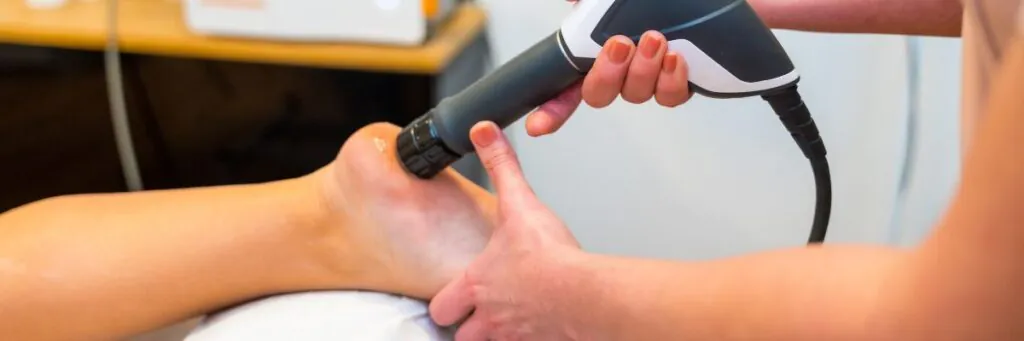
Shockwave therapy works by stimulating circulation and activating the body’s natural repair response. This process builds gradually, which is why treatment is typically delivered over a short series of sessions rather than all at once.
What Determines How Many Sessions You’ll Need?
While 3–6 sessions is common, the exact number varies from person to person. Factors that influence treatment length include:
- How long symptoms have been present
Chronic heel pain often requires more sessions than a recent flare-up. - Severity of pain and tissue irritation
More intense or persistent pain may need additional treatment. - Activity level and daily demands
Runners, athletes, or individuals who spend long hours on their feet may require more support. - Previous treatments tried
If stretching, orthotics, or other plantar fasciitis treatments haven’t helped, shockwave therapy may take longer to stimulate healing. - Individual healing response
Everyone responds differently, and treatment plans are adjusted based on progress.
What Improvement Typically Feels Like
Relief from shockwave therapy is usually gradual, not immediate. Most patients notice changes such as:
- Less heel pain first thing in the morning
- Reduced discomfort during walking or prolonged standing
- Improved tolerance for daily activity
- Decreased tenderness at the heel
Many patients continue to see improvement even after their final session, as the healing process remains active.
What a Typical Treatment Schedule Looks Like
Shockwave therapy sessions for plantar fasciitis are typically brief, lasting about 15–20 minutes. Treatments are often scheduled once per week, allowing time for tissue response between sessions.
Because shockwave therapy is non-invasive, there’s usually no downtime, and most people can return to normal activities the same day with appropriate guidance.
Why Shockwave Therapy Is Often Combined With Other Care
While shockwave therapy can be effective on its own, it’s often most successful when combined with other supportive treatments. Addressing foot mechanics, calf flexibility, strength, and movement patterns helps reduce strain on the plantar fascia and supports long-term relief.
This comprehensive approach focuses not only on reducing pain, but also on preventing symptoms from returning.
When Fewer or More Sessions May Be Appropriate
Some individuals respond quickly and may need fewer than three sessions. Others — particularly those with long-standing plantar fasciitis or recurring symptoms — may benefit from additional treatments.
A thorough evaluation helps determine the appropriate number of sessions based on your specific condition rather than relying on a preset formula.
A Practical Approach to Treating Plantar Fasciitis
When plantar fasciitis becomes persistent, shockwave therapy can be a valuable tool for reactivating the healing process. Knowing upfront that most patients need a short series of sessions — not ongoing treatment — helps set realistic expectations.If you’re unsure how many sessions may be appropriate for your condition, contacting the clinic for an individualized evaluation can help determine the best path forward based on your symptoms, activity level, and goals.