

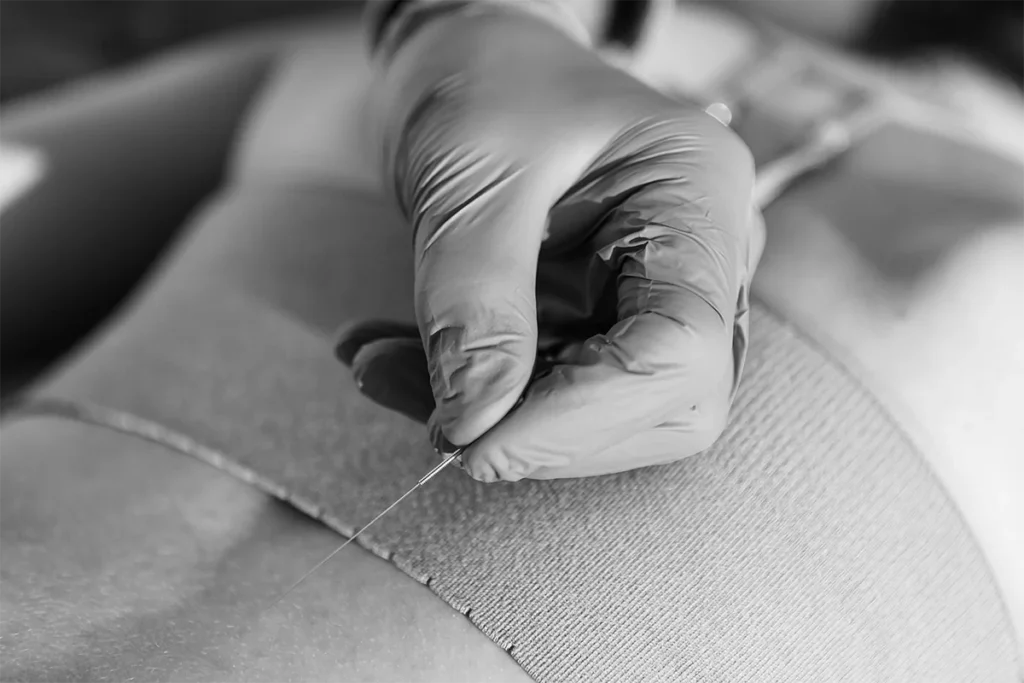
If you are considering dry needling for the first time, one of your biggest questions is probably simple: Does dry needling hurt? The honest answer is that the sensation varies. Some people feel very little when the needle enters the skin, while others experience a brief ache, pressure, cramp, or muscle twitch when the intended tissue is reached. The treatment may be uncomfortable at moments, but it should be adjusted to your tolerance and should not feel overwhelming.
The clinician’s experience and approach can make a meaningful difference. At Satriano Physiotherapy in Lutherville, Dr. Rob Satriano carefully evaluates each patient before determining whether dry needling is appropriate. He adjusts the location, pace, and dosage of treatment based on the person’s condition, sensitivity, symptoms, and response that day. The objective is not to perform the most aggressive treatment possible. It is to use dry needling thoughtfully as one part of a larger rehabilitation plan.
What Is Dry Needling?
Dry needling is a physical therapy technique that uses thin, sterile, single-use needles to treat muscles and related soft tissues. It is called “dry” needling because the needle does not inject medication or another substance into the body.
A physical therapist may recommend dry needling when myofascial trigger points, muscle guarding, or referred pain appear to be contributing to a patient’s symptoms. A trigger point is a sensitive area within a muscle that may hurt locally or produce discomfort somewhere else. For example, a trigger point around the shoulder or neck may contribute to pain that travels toward the head or arm.
Dry needling is not the same as receiving an injection. The needles are much thinner than those commonly used to draw blood or administer medication. However, the treatment is intended to reach specific muscles, so patients may feel sensations after the needle passes through the skin.
Does the Needle Hurt When It Enters the Skin?
Many patients feel little or no discomfort when a dry needle first enters the skin. Others describe a small pinch that passes quickly. The more noticeable sensation usually occurs when the needle reaches a sensitive area of the muscle.
Depending on the treatment technique and the patient’s sensitivity, this may feel like a dull ache, pressure, cramping, heaviness, or a brief electrical sensation. These feelings are usually temporary. A patient should always tell the physical therapist if a sensation feels sharp, unusual, or too intense.
Pain during dry needling is not proof that the treatment is working. Dr. Satriano’s goal is not to make a patient tolerate unnecessary discomfort. Instead, he uses the amount of treatment that makes sense for the person’s condition and nervous system. A patient who is already experiencing a significant flare-up may need a gentler approach than someone whose symptoms and sensitivity are well controlled.
What Does a Muscle Twitch Feel Like?
During dry needling, a muscle may contract briefly without the patient intentionally moving it. This is known as a local twitch response. Patients commonly describe it as a quick jump, cramp, pulse, or surprising tightening within the muscle.
A twitch can feel unusual, especially during a first appointment, but it generally lasts only a moment. Sometimes it reproduces a familiar pain pattern, which can help the physical therapist confirm that the intended tissue has been reached.
Dr. Satriano uses an active dry needling approach when clinically appropriate, carefully treating the muscle in three dimensions rather than simply placing a needle and leaving it untouched. However, the presence of a twitch is not treated as the sole measure of success. Research has not consistently shown that producing a local twitch response is necessary for improving pain or function. PubMed research on the local twitch response
Why Does Dry Needling Feel Different for Every Patient?
There is no universal dry needling experience because pain sensitivity changes from person to person and even from one appointment to another. The location being treated, depth of the muscle, number of areas addressed, previous experience with needling, and current irritability of the symptoms can all influence what someone feels.
The nervous system also responds differently depending on sleep, stress, illness, fatigue, and recent activity. Someone who tolerated a particular dosage during one appointment may need less treatment during a stressful week or while recovering from a symptom flare-up.
Dr. Satriano considers these factors before and during treatment. Many patients arrive worried because a previous treatment felt overwhelming. His philosophy is that dry needling may challenge the body, but it does not have to overwhelm it. Communication remains important throughout the appointment so the treatment can be modified when necessary.
What Happens Before Dry Needling Begins?
Dry needling should not begin simply because a patient points to a painful muscle. Dr. Satriano first performs a thorough evaluation to understand the person’s history, symptoms, movement patterns, functional limitations, and goals. He looks at how groups of muscles work together rather than examining only the location that hurts.
This clinical reasoning is especially important because the painful area is not always the primary source of the problem. Shoulder pain, for example, may be influenced by the shoulder blade, neck, rib cage, posture, or the way multiple muscles coordinate during movement.
Dr. Satriano also reviews relevant health information and explains why he is recommending dry needling. Patients have an opportunity to ask questions and discuss concerns before deciding whether to proceed. He teaches that knowing when not to needle is more important than knowing when to needle. If another treatment is more suitable that day, dry needling may be modified or postponed.
What Should You Expect During Treatment?
The position used during treatment depends on the muscle being addressed. You may lie on your stomach, back, or side, or you may sit in a supported position. The skin is prepared, and Dr. Satriano identifies the tissue he intends to treat.
As the needle enters the muscle, you may feel pressure, an ache, or a twitch. It is important to keep breathing and avoid holding unnecessary tension. You can communicate at any point if you need a pause or adjustment.
The number of needles and amount of time spent needling vary. More needles do not automatically mean better treatment. Dr. Satriano emphasizes proper dosage and comprehensive clinical reasoning rather than following the same protocol for every patient. Sometimes a focused treatment is the most appropriate starting point, particularly for someone who is sensitive or unfamiliar with dry needling.
Will You Feel Sore After Dry Needling?
Temporary soreness is one of the most commonly reported responses after dry needling. It may feel similar to the soreness experienced after exercise or a deep massage. Mild bruising or a small amount of bleeding can also occur. Research examining adverse events associated with therapeutic dry needling found that minor responses such as bleeding, bruising, and discomfort were more common than serious complications. Research on adverse events associated with dry needling
Soreness may begin shortly after treatment or become more noticeable later that day. The duration and intensity vary. Many people experience only mild, temporary discomfort, while others may need more time before the area settles.
Your physical therapist will explain what to expect based on the area treated and provide individualized guidance about activity afterward. Contact the practice if you develop unexpected symptoms, worsening pain, difficulty breathing, or another reaction that concerns you.
How Does Dr. Satriano Make Dry Needling More Comfortable?
Technical skill matters, but patient education and communication are equally important. Dr. Satriano holds a master’s degree in teaching and worked as an educator before becoming a physical therapist. He explains what he is doing, what a patient may feel, and why a particular muscle is being treated.
Dr. Satriano trained directly under Jan Dommerholt, a leading researcher and educator in trigger point dry needling and myofascial pain. He also taught dry needling for more than eight years through Myopain Seminars and contributed to the third edition of Trigger Point Dry Needling: An Evidence and Clinical-Based Approach.
His experience includes treating complex chronic pain, hypermobility, movement dysfunction, athletes, performing artists, and Special Forces soldiers. Other physical therapists also refer patients to him, including cases involving anatomically sensitive areas. These experiences support an approach built around precision, appropriate dosage, and knowing when another technique should come first.
Is Dry Needling a Standalone Treatment?
Dry needling may reduce pain or muscle tension for some patients, but it does not automatically resolve the reason the symptoms developed. Dr. Satriano describes the potential response as a “window of opportunity.” If needling makes movement more comfortable, that window can be used to retrain movement, perform corrective exercises, or address contributing strength and coordination problems.
For this reason, dry needling at Satriano Physiotherapy is typically integrated with a broader plan. Depending on the patient, that plan may include therapeutic exercise, movement retraining, education, gentle manual therapy, activity modification, or another appropriate treatment.
Results vary, and dry needling is not right for every condition or every patient. A careful evaluation is necessary to determine whether it belongs in the treatment plan.
Schedule a Dry Needling Evaluation Near Baltimore
Dry needling can cause brief discomfort, a muscle twitch, or temporary soreness, but treatment should be matched to your tolerance. You should never feel pressured to endure an overwhelming experience or continue when something feels wrong.
Satriano Physiotherapy is located in Lutherville and serves patients from Towson, Cockeysville, Hunt Valley, Baltimore City, and surrounding communities. If pain, muscle tension, or movement limitations are interfering with your daily life, contact Satriano Physiotherapy to schedule an evaluation with Dr. Rob Satriano and learn whether dry needling may be appropriate for you.