

A patient came to see me approximately 10–11 weeks after a total knee replacement. Despite
having already participated in physical therapy, she could only bend her knee to about 90
degrees. Her surgeon and previous physical therapist had recommended a manipulation under
anesthesia (MUA) because she wasn’t regaining sufficient knee motion. Ultimately, she avoided the procedure.
Through a combination of hands-on treatment, targeted exercises, and consistent work on
mobility at home, we were able to improve her knee flexion to approximately 110–115 degrees.
Cases like this are why I place so much emphasis on restoring knee range of motion after
surgery. When patients struggle to regain mobility, recovery becomes more complicated, and in
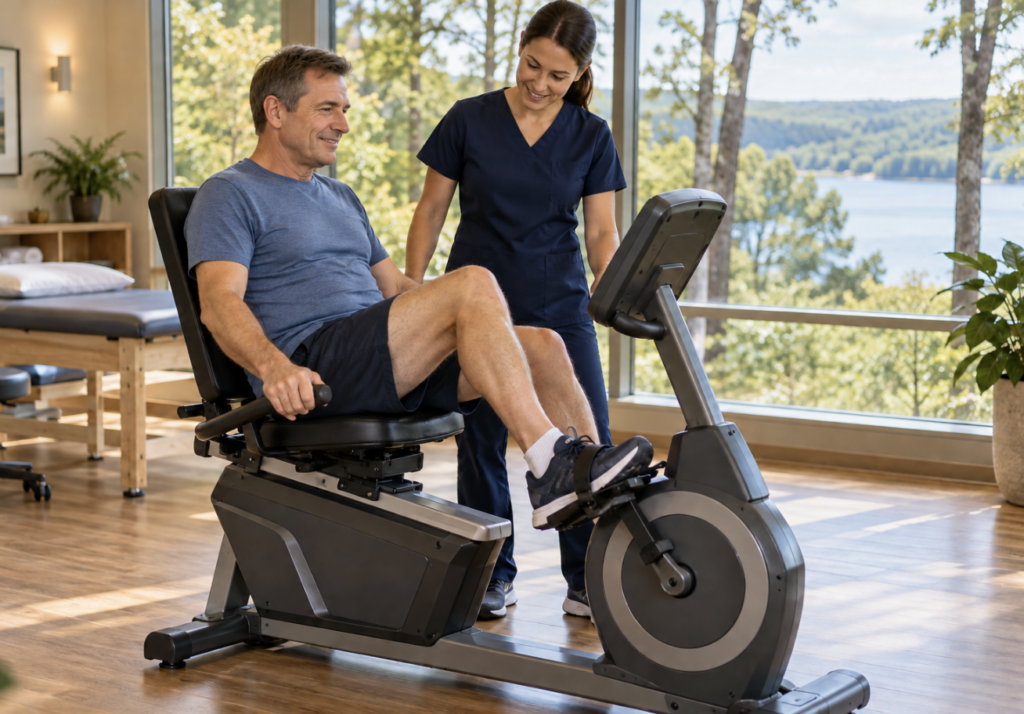
some cases, another procedure is recommended. One of the simplest tools I recommend to help patients work on knee mobility at home is a stationary exercise bike.
What Does a Manipulation Under Anesthesia Actually
Involve?
I’ve had patients talk about a knee manipulation as though it’s a relatively simple follow-up
procedure. I think it’s important that people understand what it actually involves. During a manipulation under anesthesia, the patient is anesthetized while the surgeon manually forces the knee through a greater range of motion. The purpose is to break up adhesions and restrictive scar tissue that have developed around the joint following surgery. Although the patient isn’t awake during the procedure, the physical forces applied to the knee can be substantial. Afterward, patients may experience significant pain, swelling, and inflammation.
And perhaps most importantly, the procedure doesn’t eliminate the possibility of stiffness returning. Maintaining the newly gained range of motion requires consistent rehabilitation, often beginning immediately afterward. MUA can be an appropriate and effective intervention when postoperative stiffness isn’t
improving. But it isn’t something I consider trivial. When possible, I’d much rather help patients
restore their knee motion through rehabilitation before another procedure becomes necessary.
Why Knee Range of Motion Matters After Replacement
Surgery
Following a knee replacement, swelling, pain, and stiffness can make bending and straightening the knee difficult. Some limitation is expected initially, but restoring motion is one of the most important priorities during rehabilitation. Without sufficient knee flexion, everyday activities become challenging. Walking down stairs, getting in and out of a car, or getting onto the floor to play with grandchildren can all become difficult. This is why I encourage patients to begin working on mobility early, within the guidelines provided by their surgeon and physical therapist.
How Soon Can You Use an Exercise Bike After Knee
Replacement?
Often, sooner than patients expect. With clearance from their surgeon or physical therapist, some patients can begin gentle stationary cycling within the first several days after surgery. And you don’t need enough knee motion to pedal all the way around. Initially, I have patients gently rock the pedals forward and backward through whatever range of motion is available. As the knee gradually bends more comfortably, they can increase the movement until they’re able to complete a full revolution. Seat height matters, too. Starting with a higher seat generally requires less knee flexion. As mobility improves, lowering the seat slightly can provide an opportunity to work through more motion. There’s no need to force the knee through significant pain. The goal is to encourage comfortable, consistent movement without creating unnecessary irritation.
Why I Recommend Having an Exercise Bike at Home
I see this all the time. Someone attends physical therapy a few times per week, but they’re barely working on knee motion between appointments. Having a stationary bike at home changes that.
Patients can put the bike in front of the television and work on their knee for five or ten minutes several times throughout the day. That kind of frequency is difficult to reproduce with outpatient therapy visits alone.
For many people, getting onto the floor to perform exercises is also challenging immediately after surgery. Having a stable, accessible bike makes it easier to incorporate movement into their daily routine. This doesn’t replace physical therapy or a comprehensive home exercise program. Strengthening, walking, balance, and other exercises remain important. But when someone is struggling with knee flexion, I want them to have an easy way to work on that motion consistently.
How Much Should You Use the Bike?
Early in recovery, I generally recommend short, frequent sessions rather than one long workout. Five to ten minutes at a time is often a reasonable starting point, gradually progressing toward ten to twenty minutes as tolerated. Initially, resistance should be minimal. We’re primarily using the bike to restore movement, not to build cardiovascular endurance. Some discomfort is expected during rehabilitation, but I generally encourage patients to keep it mild, around 3 out of 10 or less. Increasing swelling, pain, or stiffness afterward may indicate that they’re doing too much. The appropriate frequency and intensity will depend on the patient’s symptoms, surgical instructions, and progress.
What Kind of Exercise Bike Should You Use?
Both upright and recumbent stationary bikes can be useful after knee replacement. I generally prefer upright bikes for their more natural sitting posture, but the most important considerations are stability, ease of getting on and off, and an adjustable seat. Choose a bike you can use safely and comfortably.
Should You Rent an Exercise Bike After Knee Replacement?
Renting can make sense for patients who want convenient access to a stationary bike without purchasing one. Having a bike at home makes it easier to work on knee mobility frequently during recovery, and patients can return it once they no longer need it. At Satriano Physiotherapy, we offer stationary exercise bike rentals for patients recovering from knee replacement and other orthopedic procedures.