

By Rob Satriano, PT, DPT | Holistic Physiotherapy and Wellness
If you’re preparing for a total knee replacement, you’ve probably spent considerable time
researching your surgeon, the procedure, and what to expect afterward. But have you thought
about what you’ll need when you get home?
In my experience as a physical therapist, the first one to two weeks after knee replacement are
particularly important. Pain, swelling, and stiffness are expected, but how you manage them can
have a significant impact on your ability to participate in rehabilitation.
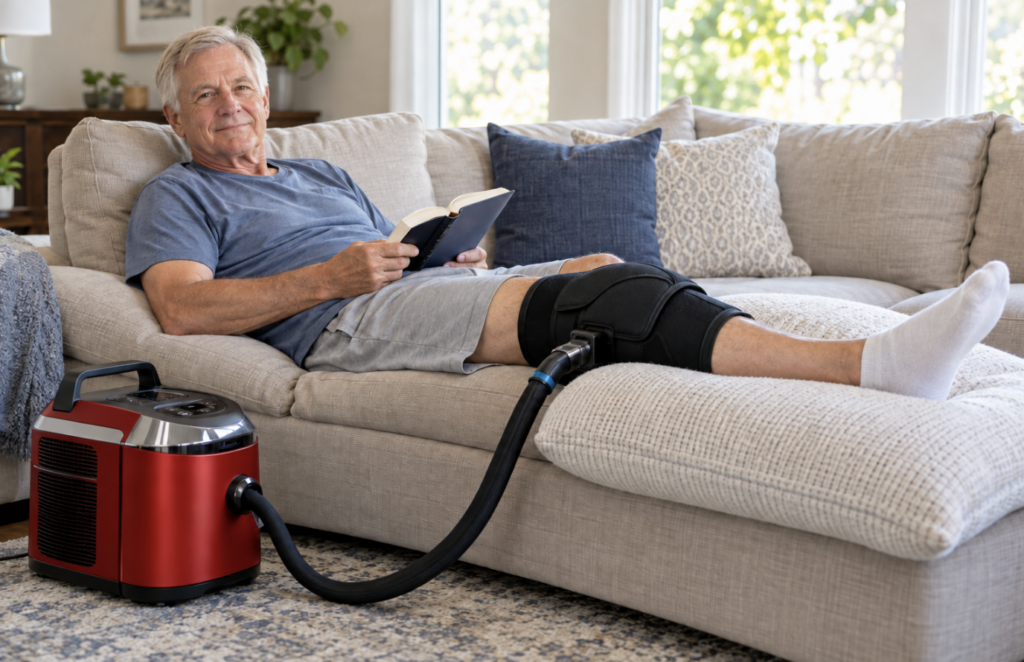
One piece of equipment I frequently recommend is a cold-compression machine, sometimes
called an ice machine.
For many patients, renting one is absolutely worth considering. Here’s why.
Why Managing Pain and Swelling Matters
After knee replacement, pain and swelling aren’t simply uncomfortable. They can interfere with
the movement necessary for recovery.
When patients experience significant pain, they’re often less likely to perform their exercises.
Less movement can contribute to stiffness and difficulty restoring range of motion, making
rehabilitation even more challenging.
It’s a cycle I see far too often.
One of the biggest misconceptions about knee replacement recovery is that a few physical
therapy appointments each week are enough.
They’re not.
What you do at home between appointments is critical. Managing pain and swelling can
make it easier to perform the gentle, frequent movement your new knee needs.
Ice Packs vs. Cold-Compression Machines
Traditional ice packs can provide temporary pain relief, but cold-compression machines offer
some practical advantages.
These systems circulate cold water through a specialized sleeve surrounding the knee. Many also
provide compression, which may help manage postoperative swelling.
In my clinical experience, the addition of compression is what makes these machines
particularly valuable.
While research hasn’t conclusively demonstrated that cold-compression machines produce better
long-term outcomes than traditional icing for every patient, I’ve observed meaningful differences
in comfort and pain management among patients who use them.
And when pain is preventing someone from exercising, improving comfort can make a real
difference.
When Should You Use an Ice Machine After Knee
Replacement?
I place particular emphasis on the first seven days following surgery, when pain and swelling can
be substantial.
During this period, I generally encourage patients to use cold compression frequently, alternating
treatment with breaks throughout the day.
I deliberately avoid prescribing one universal schedule because every patient is different.
Swelling, pain, skin sensitivity, circulation, and surgical instructions all influence appropriate
use.
I often prefer cold compression after exercise, when the goal is to calm the knee and manage
discomfort following movement.
Always follow your surgical team’s instructions, protect your skin, and avoid excessive or
prolonged cooling.
Don’t Forget the Importance of Movement
If there’s one thing I wish every knee replacement patient understood, it’s that early, consistent
movement is essential.
In fact, I consider having access to a stationary exercise bike at home one of the most valuable
parts of preparing for knee replacement recovery.
Early bike exercises don’t necessarily involve full revolutions. Simply rocking the pedals forward
and backward, within a comfortable and appropriate range, can help patients begin working on
knee mobility.
Having a bike at home makes it easier to incorporate gentle movement throughout the day, rather
than relying exclusively on scheduled physical therapy appointments.
This is where cold compression and movement complement each other.
The bike helps you work on mobility. Cold compression helps manage the pain and swelling that
might otherwise interfere with it.
Neither replaces skilled rehabilitation, but together they can be valuable tools for recovery.
Why Rent Instead of Buy?
High-quality cold-compression systems can cost thousands of dollars to purchase.
For most patients undergoing a single knee replacement, owning one simply doesn’t make
financial sense.
The period when this equipment is most valuable is usually relatively short, particularly during
the first couple of weeks after surgery.
Renting provides access to a higher-quality system without the substantial purchase expense.
My strongest recommendation is to arrange your rental before surgery.
Have the equipment ready when you return home, rather than scrambling to find it when you’re
already dealing with postoperative pain and swelling.
Give Yourself the Best Opportunity for a Successful
Recovery
A successful knee replacement doesn’t end in the operating room. In many ways, the real work
begins when you get home.
Your surgeon performs the procedure, and your physical therapist guides rehabilitation. But the
consistent work you do between appointments plays an enormous role in your recovery.
Preparing ahead of time with an appropriate home exercise plan and equipment can make that
process much more manageable.
At Holistic Physiotherapy and Wellness, we offer cold-compression machine and stationary
bike rentals for patients preparing for or recovering from orthopedic surgery in the Baltimore
area.
Contact us to discuss current availability and rental options before your procedure.
Don’t wait until you’re struggling with pain, swelling, or stiffness to start planning your
recovery.