

Dry needling relief can last anywhere from a few days to several weeks. In some cases, the impact is far greater than patients expect.
While not every situation produces dramatic change, there are instances where dry needling can be a genuine turning point. Even individuals who have dealt with chronic pain for years may experience meaningful improvement when myofascial trigger points are a primary driver of their symptoms. Significant shifts in pain and mobility after a single session are absolutely possible — including in longstanding low back pain cases.
How long those results persist depends on several variables: the underlying cause of the symptoms, the duration of the issue, and whether muscle dysfunction is central to the problem or part of a broader pattern. Outcomes are also influenced by how accurately the involved structures are identified and how appropriately the intervention is delivered.
When applied with sound clinical reasoning and proper dosing, dry needling can produce meaningful change.
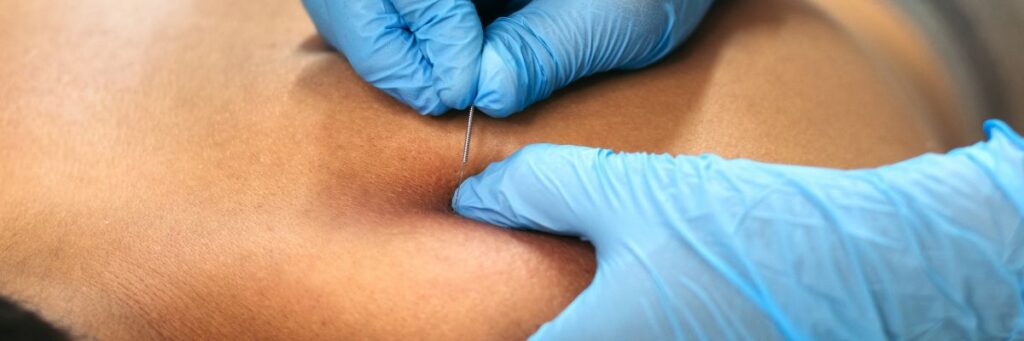
What People Mean When They Ask How Long Dry Needling Lasts
When patients ask this question, they are usually trying to understand one of three things:
- How long will I feel better after today’s session?
- Will this permanently fix the issue?
- Is this worth trying compared to other treatments?
Dry needling can reduce muscle tone and decrease local pain sensitivity relatively quickly. However, muscle tension typically develops in response to posture, repetitive strain, training errors, stress, or underlying weakness.
The durability of relief depends on how much those factors continue to influence the area — and whether the primary pain generators were accurately identified in the first place.
How Long Relief Typically Lasts After One Session
After a single session, many people experience improvement that lasts several days to about a week. In some cases, the initial response is stronger.
Individuals with frequent headaches or migraines may notice an immediate reduction in both frequency and intensity. Others experience a measurable drop in their baseline pain level right away — which is often clinically significant. Lower baseline pain alters movement tolerance, activity levels, and overall confidence.
Some patients also report improved sleep following treatment. When muscle tension decreases and pain sensitivity settles, falling asleep and staying asleep can become easier. That improvement can create a meaningful domino effect. Better sleep enhances tissue recovery, reduces overall pain sensitivity, improves mood, and increases energy. When someone sleeps better, they often hurt less — and when they hurt less, they are more likely to move, exercise, and reinforce positive change.
For certain individuals, relief persists well beyond a week. For others, improvement tapers sooner. That response provides useful feedback and helps guide subsequent treatment decisions.
Temporary soreness for 24–48 hours is common and typically resolves without issue.
The response after a single visit often reflects how precisely the contributing tissues were addressed and how the treatment was calibrated to the individual.
Why Results Vary From Person to Person
Not all muscle pain presents the same way. Acute tension generally responds faster than long-standing patterns that have developed over months or years.
Other factors that influence how long results last include:
- Duration of symptoms
- Daily workload and posture
- Activity level
- Strength and mobility limitations
- Stress and overall recovery capacity
It also matters why the trigger points developed. Prolonged desk work, repetitive strain, training overload, or chronic stress can all perpetuate muscle guarding.
Dry needling is most effective when assessment goes beyond the painful area and considers the broader movement picture. Addressing the true driver often determines whether relief is temporary or more durable.
Can Dry Needling Create Long-Term Improvement?
Yes — particularly when it is used strategically.
Dry needling can reduce pain sensitivity and normalize muscle tone. For lasting improvement, most patients benefit from pairing it with strengthening, mobility work, and adjustments to daily habits.
In some cases, lowering baseline pain improves sleep quality and increases activity tolerance enough to allow consistent participation in exercise. When that occurs, dry needling becomes a catalyst for broader change rather than a standalone intervention.
Long-term progress typically results from individualized treatment that evolves based on response.
How Many Sessions Are Usually Needed?
There is no universal number. Some patients respond strongly within one or two visits. Others benefit from a short series to shift baseline pain and movement tolerance more meaningfully.
One advantage of dry needling is that it provides early clarity. Most people can tell within one or two sessions whether it is helping. If measurable improvement occurs — even if partial — it suggests the approach is appropriate.
If improvement is minimal, the plan should be reassessed rather than continued automatically. Effective treatment should adapt based on response.
When Follow-Up Care May Be Necessary
If symptoms return quickly, it often indicates that underlying contributors — such as strength deficits, load intolerance, or movement inefficiencies — still need attention.
In those cases, strengthening, movement retraining, and load management become more important than repeating needling in isolation.
Dry needling is most powerful when used intentionally within a structured plan, not as indefinite maintenance.
Setting Realistic Expectations for Dry Needling
Dry needling can be highly effective when applied thoughtfully. For some patients, it produces rapid and dramatic improvement. For most, it serves as a valuable component of a broader strategy.
How long results last depends on:
- The nature of the condition
- Its duration
- Contributing lifestyle and movement factors
- The quality and precision of delivery
When used appropriately, dry needling can be an efficient and impactful tool within a comprehensive care plan.